Employee turnover starts in hiring, not in retention

Every time a company loses someone at the nine-month mark, the internal conversation usually heads in the same direction: retention, culture, salary, benefits. It rarely goes back to where the problem actually started — the hiring process.
It is easier to believe people leave because competitors pay better. Or because "this generation has no commitment". Or because purpose is missing. All those explanations share one trait: they locate the cause of failure after the contract is signed. And that conveniently lets the company keep hiring the same way.
The evidence points elsewhere. When someone does not last long, they most likely did not fit on day one. What happened afterwards just made visible what was already decided before.
The data nobody wants to look at
The most quoted study on this comes from Leadership IQ, led by Mark Murphy, with a sample of 5,247 hiring managers. The conclusion was uncomfortable: 46% of new hires "fail" within the first 18 months. By "fail" they mean termination, forced resignation or documented underperformance.
The interesting part is not the headline figure. It is the breakdown. Only 11% of those failures were attributed to a lack of technical competence. The remaining 89% came from other causes: lack of coachability, low emotional intelligence, weak real motivation or poor temperament fit for the role.
Put differently: most early turnover does not happen because people cannot do the job. It happens because they never fit the job. And that is not something that appears after hiring. It is something that should have been visible before.
SHRM places the cost of replacing a failed hire between 30% and 150% of the annual salary of the position, and for leadership roles it rises even further. In other words, each bad hire is paid for over years, not over weeks. We dug into the hidden cost of bad hiring in detail.
Why the current system does not detect it
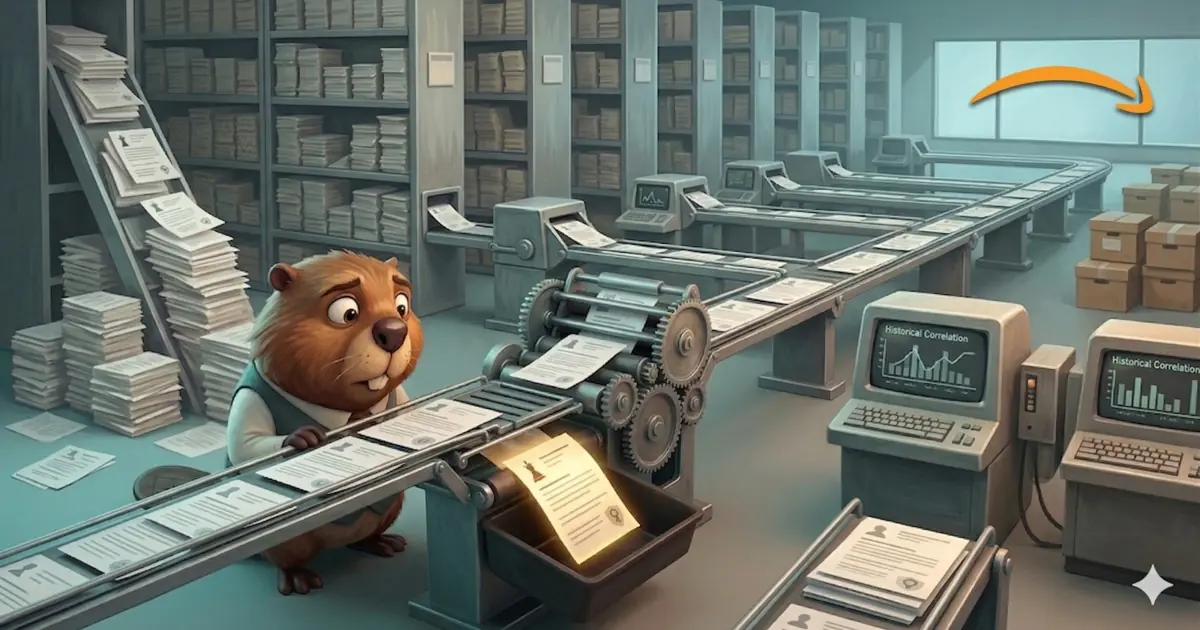
The standard path of a hire today is, in most companies, fairly predictable. A CV arrives. It passes through an automated filter. Someone from HR runs a first cultural call. Then comes a technical interview, sometimes an exercise, sometimes a panel. Finally an offer.
The problem is that almost no real work is observed anywhere in that path. What is observed are answers to questions about work. Self-descriptions. Credentials. How someone behaves during 45 minutes in a room with bad coffee.
None of that reliably predicts how the person will work over the next two years. We have known this for decades. The classic Schmidt & Hunter meta-analysis places unstructured interviews far below work samples in predictive validity. Yet unstructured interviews remain the main filter in most processes.
The uncomfortable point: If your hiring process does not observe work, your retention programme is not fixing a culture problem. It is patching a filter problem.
On top of that, the final decision is often made fast. We already saw the data in the six-second CV study: the CV is judged in that time, and what follows is mostly confirmation of that first impression. When a system decides that quickly, an 18-month turnover rate stops being a surprise. It is arithmetic.
The "culture fit" trap
When turnover rises, there are two typical reactions. The first is to tighten the cultural filters: more interviews, more panels, more "values" questions. The second is to invest in retention: better onboarding, bonuses, career plans, mentoring programmes.
Neither attacks the actual origin. The first often confuses "fitting in with us" with "looking like us", and that does not predict performance; it predicts homogeneity. The second arrives too late, because it tries to compensate for a structural mismatch with post-contract gestures.
Retention programmes are useful when the right person came through the right door. They are not useful to rescue hires that never fit the role. That does not get fixed by Thursday fruit.
At this point another common deviation appears: blame the candidate. "Young people cannot take pressure." "Commitment is dead." "New generations do not want to work." It is an elegant way to avoid looking at what happens just before the contract. If someone leaves after nine months, it is very likely that the process that hired them could not predict that outcome.
What if there were another way?
What if there were another way? Some hiring models have stopped asking how you would work and started observing how you actually work. The difference is not cosmetic: it predicts turnover better.
There is a logic shift some companies are quietly introducing, without big announcements. Instead of expanding the number of interviews, they reduce the weight of interviews and place more weight on observing concrete resolutions before hiring.
The reasoning is simple. If 89% of failures come from things that do not show well in a CV or in a standard interview, you need a phase where those things do show. How that person prioritises under pressure. What they decide with incomplete information. How they argue when they disagree. What quality their work has when no-one is scoring them in real time.
That is not achieved by adding "one more interview". It is achieved by designing a scenario. And the scenario has to resemble real work, not an exam.
The shift in focus: evidence before impression
What reduces 18-month turnover is not more aggressive offers. It is that, before making the offer, the company has actually seen the person work. Even on a small piece. Even on a bounded case.
You do not need a two-week bootcamp or a massive technical test. You need a reasonable situation, with a context similar to real work, and the space to see how the person handles it. How they structure their answer. What they ask before starting. How they communicate what they did at the end.
That covers precisely the dimensions Leadership IQ identifies as responsible for 89% of failures: coachability, motivation, temperament fit, emotional intelligence. Dimensions that cannot be declared. They show up when there is a real problem in front of the person.
This logic already has a name. It is consolidating under Skill-Based Hiring, although the term is often used loosely. The interesting part is not the name. It is the inversion of order: evidence first, narrative later.

If your process does not observe work, your turnover metric is measuring hiring failure, not people failure.
What BUSCOS does at this point
BUSCOS is not a job board. It is a system where a company can pose real professional scenarios and observe how candidates approach them before inviting them to an interview, or even before looking at a CV.
In practice, the company publishes a situated scenario: a case, a decision, a bounded problem. Candidates answer with their reasoning, their judgement and their way of structuring the solution. The company observes evidence before talking to anyone.
That changes the dynamic in a concrete way. Instead of picking between twenty indistinguishable CVs, the choice is between twenty real ways of approaching the same problem. Instead of "seems like a good candidate", the output is "this is how this person thinks under this specific pressure".
It is not an elimination puzzle of trick questions. It is a window into the work before hiring the work. And that window is exactly what Leadership IQ says is missing when 89% of failures cannot be explained by a lack of technical skill.
Turnover is not managed. It is prevented
The best conversation about retention does not happen in HR twelve months after hiring. It happens before signing, by deciding what you will observe and what you will ignore.
If your process only observes CVs, interviews and references, whatever you decide there will shape turnover for the next two years. However good your onboarding is, it cannot compensate for a bad entry decision.
And if your process does take pre-contract evidence seriously, several effects appear on their own: fewer failed hires, lower hidden costs, less internal energy spent on "rescuing" people who never fit, less frustration in teams that have spent months adapting to someone who maybe should never have been hired that way.
Observe work before hiring work
Design real scenarios for your next process and decide with evidence, not with a CV.
Create my free accountThe useful question is no longer how to retain better. The useful question is what you are actually looking at when you decide to hire. If that step changes, the rest tends to work almost on its own. If it does not change, no culture programme will compensate for what the filter never learned to detect.