
THE KEY POINT
The professional must be able to turn a specific need into a system that finds relevant information, respects access rights and allows its answers to be checked. Experience with models is one part; integration, evaluation and explaining it to the team are needed too.
Start with a question the team keeps asking.
One department asks about commercial terms. Another looks for the current procedure for handling an incident. The answers are spread across folders, documents and people who know the process. The request seems simple: we want an assistant that answers questions about our information.
Before defining the role, specify who will ask, what they need to find and what the consequences of a wrong answer are. Locating a manual does not require the same as interpreting a contractual clause or recommending a course of action. Not every answer should be automated.
- Which questions come up repeatedly and whose time they take up.
- Which documents contain the answer and who maintains them.
- Which information each team is allowed to consult.
- Which questions require going to a person.
An assistant needs information it can use.
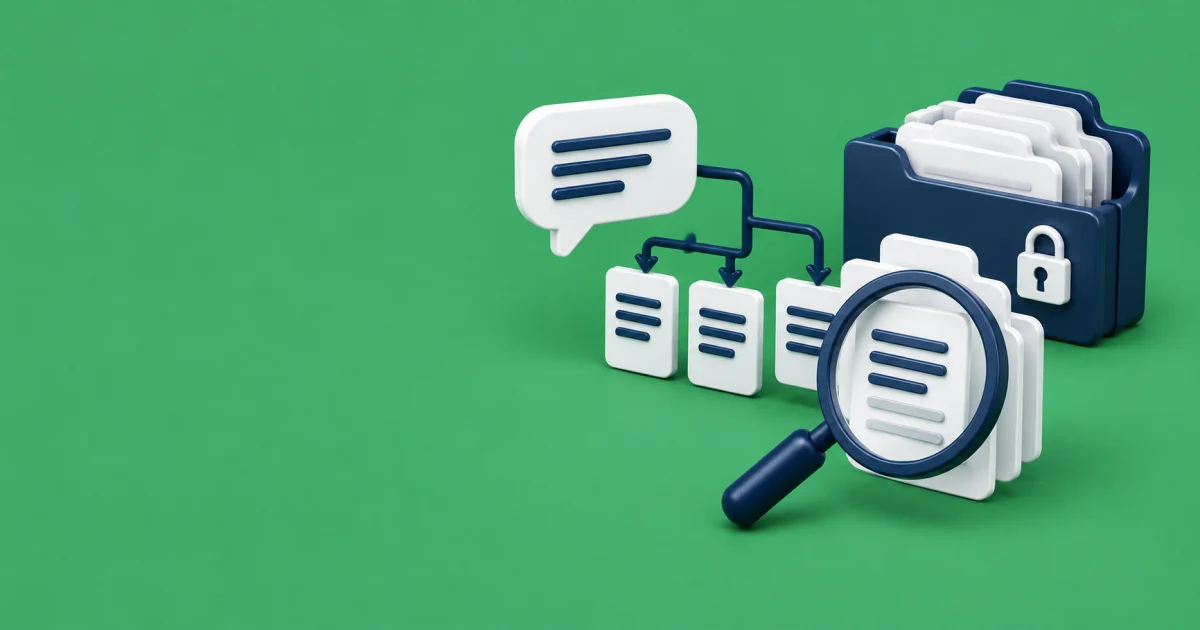
A common pattern is to search for relevant passages in the documents and provide them to the model to prepare an answer. This is known as RAG. Microsoft describes this approach as combining search and generation grounded in the organisation's own data.
To define the role, look at what surrounds the model: document versions, keeping sources up to date, user identity and handling incomplete information. If two procedures contradict each other, the candidate should identify the conflict before promising a reliable answer.
Further reading: Microsoft Learn: how RAG works
Which capabilities are worth exploring.
These capabilities may be combined in one person or require collaboration. The scope, the continuity and the technical environment help to define this; the title AI Engineer does not settle all of those questions on its own.
| Work required | Capability you should define |
|---|---|
| Connecting repositories and keeping documents up to date. | Integration and data handling. |
| Finding useful information and preparing answers with models. | Applied AI and information retrieval. |
| Respecting what each person is allowed to consult. | Identity, permissions and security. |
| Checking answers against questions from everyday work. | Evaluation and error tracking. |
| Explaining what the assistant can do and when to ask for help. | Communication and adoption. |
What they should demonstrate before the interview.
A scenario might present two versions of a procedure, an ambiguous question and users with different permissions. What matters is observing what information they ask for, what risk they spot and how they would distinguish a verified answer from a conclusion that still needs checking.
Ask them to explain how they would test the proposal and what they would do when they cannot find enough information. An attractive visual demo is no substitute for knowing how the system will be maintained. BUSCOS Evidence brings together answers to five scenarios, an audio explanation and a human-reviewed report to prepare for the interview.
Frequently asked questions
Do we need to train a model from scratch?
That does not follow from this need. First the questions, sources and constraints need to be defined; the professional should justify the technical approach they propose.
Can it access all the documents?
Access should match the permissions and the agreed use. Having documents available does not mean that anyone should be able to consult them.
Does BUSCOS build the assistant?
No. It helps you clarify the role and obtain evidence about how candidates would approach that work.
Keep clarifying what you need. A specific situation is the starting point.