
Personal productivity and business earnings are different outcomes
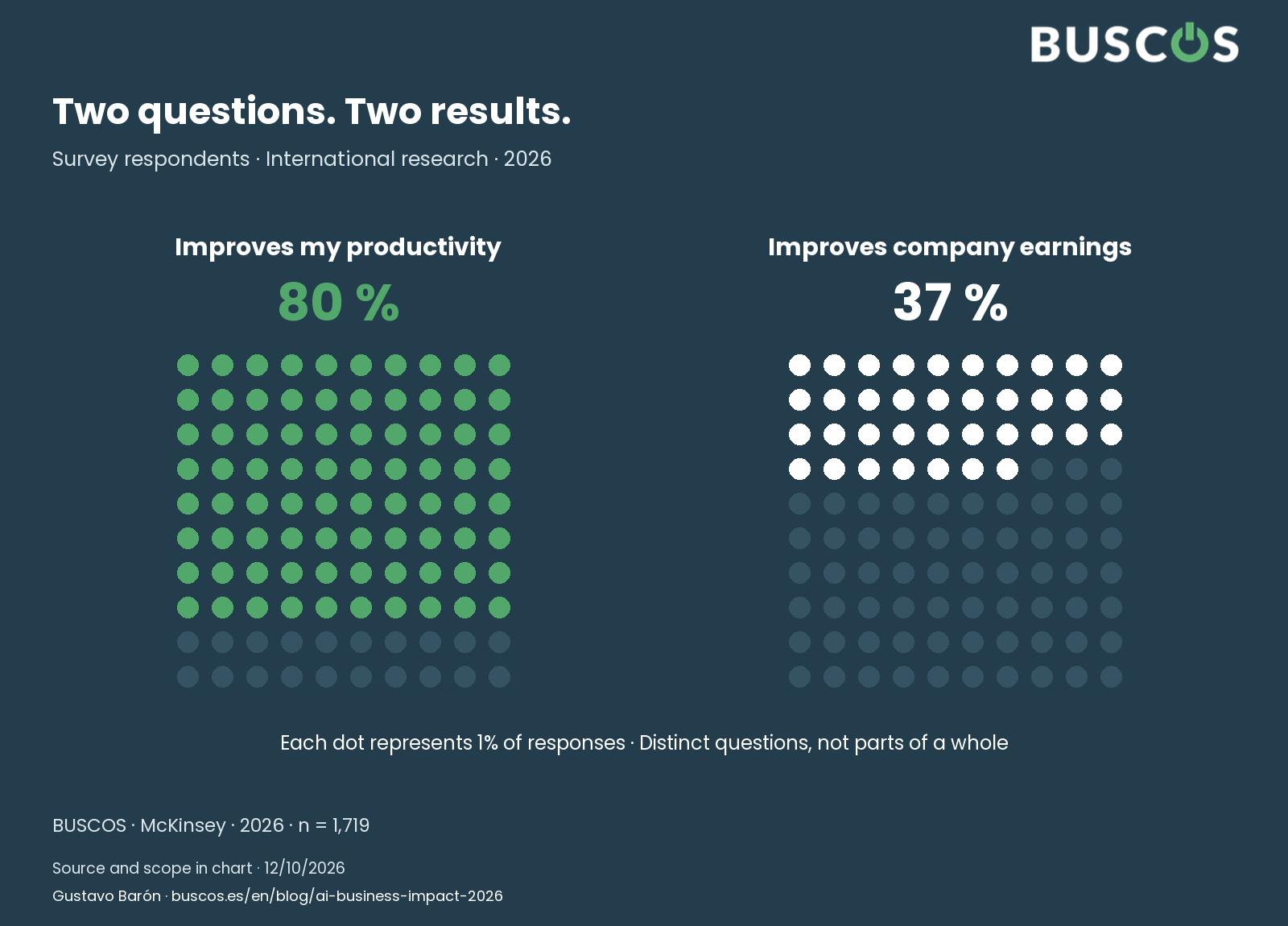
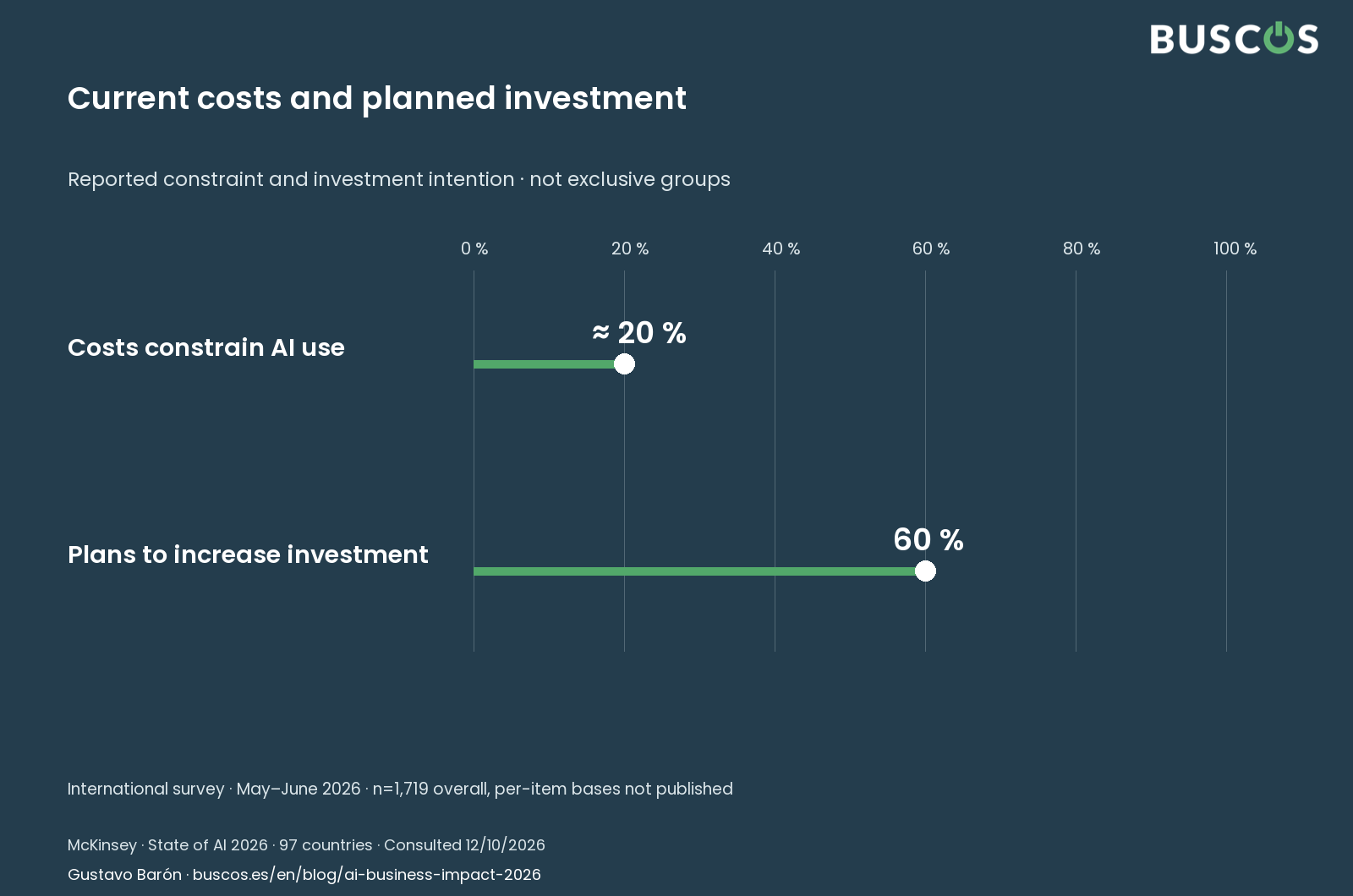
80% of respondents report that AI has improved their own productivity. 37% attribute a positive AI contribution to their organisation's earnings before interest and taxes, or EBIT. Both figures appear in McKinsey's 2026 international survey, but answer different questions.
The first concerns a person's experience of their work. The second records an assessment of an organisation's financial outcome. They are not successive funnel stages or complementary percentages, and subtracting them would not calculate lost value. The published summary does not tell us which respondents gave both answers either.
The contrast raises a useful business question: when someone works better with AI, what changes across the whole workflow? An individual improvement can matter while needing another check before becoming a claim about company results. The chart retains both questions precisely to avoid confusing them.
An international survey, not a measurement of Spanish SMEs
The online study ran from 4 May to 8 June 2026 and was published on 25 August. It involved 1,719 participants in 97 countries. 36% work in organisations with more than one billion dollars in annual revenue. Responses are weighted by each participant's country's contribution to global GDP.
These features matter when interpreting the figures. The survey is not a representative sample of Spanish enterprises or small Balearic businesses. It records responses from people working across organisation sizes, industries and functions. It does not independently check every company's accounts or processes.
The summary also does not publish the specific response count for each question used here. 1,719 refers to the overall study; we do not use it as an exact denominator to turn every percentage into a headcount. The values describe reported responses, not causal effects demonstrated by a controlled experiment.
Individual improvement can take different forms
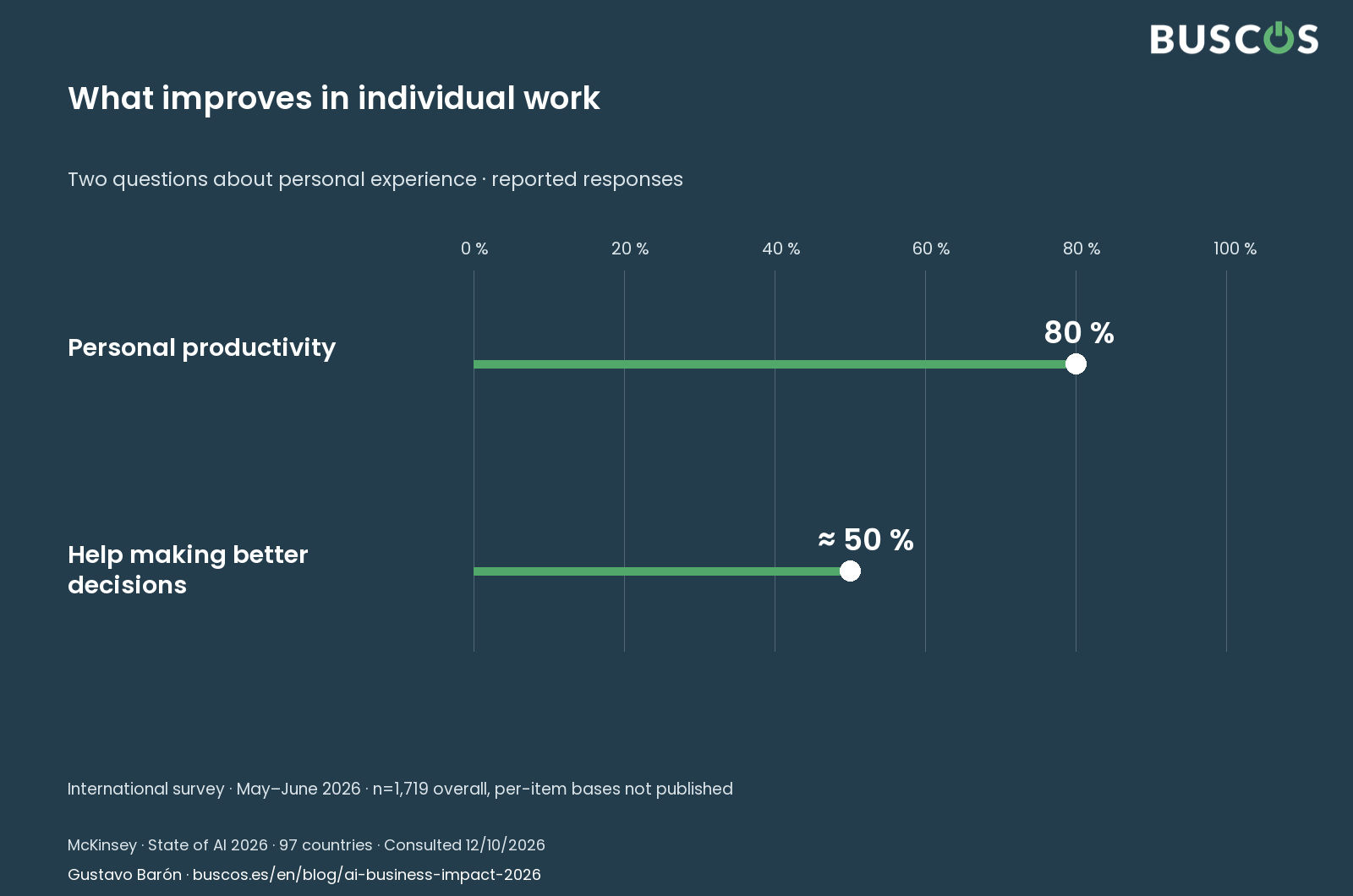
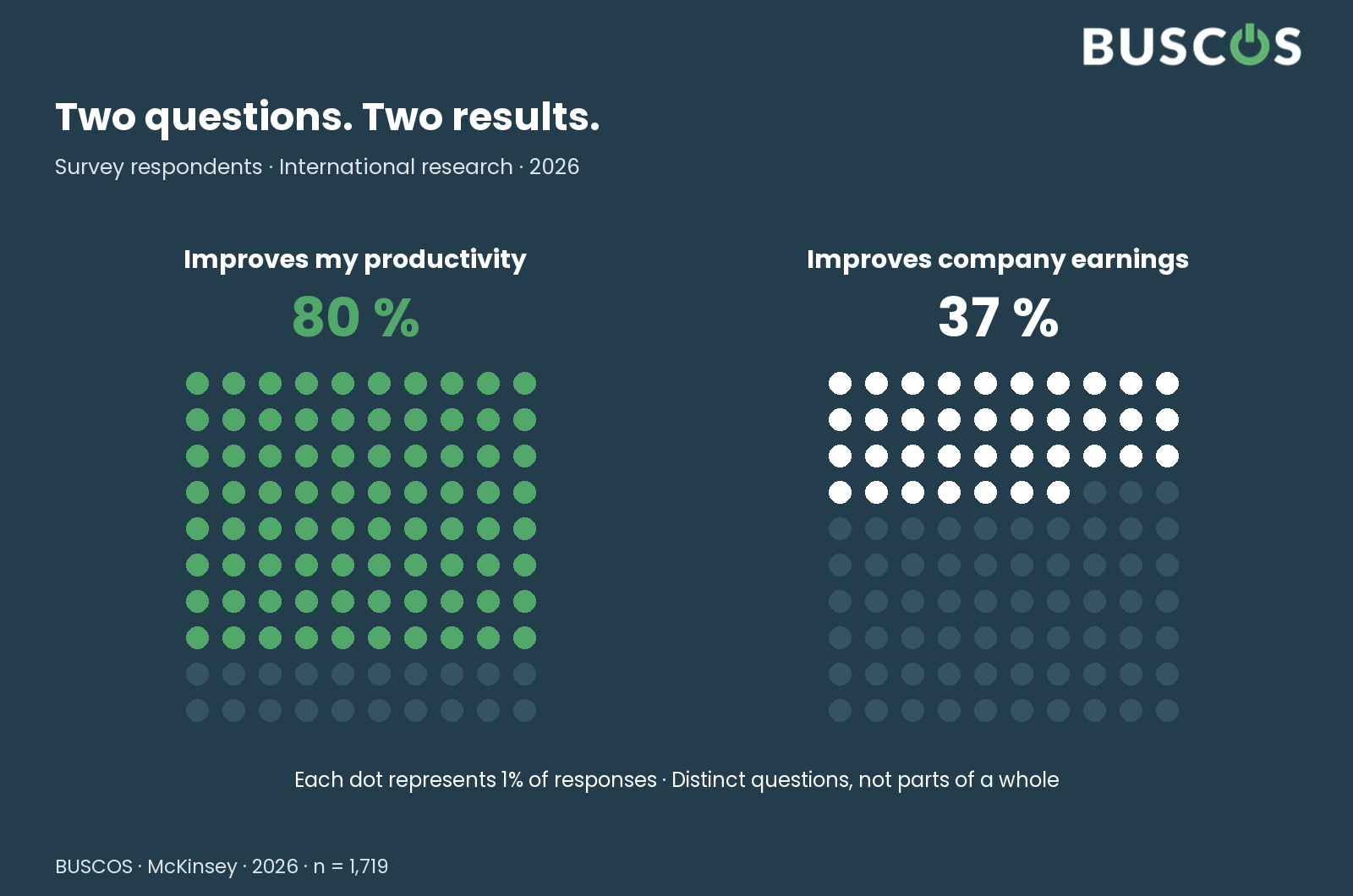
The study also reports that about half of respondents say AI helps them make better decisions. The chart distinguishes that answer from perceived personal productivity improvement. One person can report both, and the source does not provide their individual overlap here.
Productivity need not mean only writing faster. Examining a task may involve whether information is found more effectively, corrections fall or a response arrives with adequate references. These are ways to frame checks, not outcomes quantified by this survey for your company.
An example makes the distinction clear. Preparing a draft response sooner can help its writer. If someone else must rewrite it or verify references that do not exist, the organisation needs to count that work too. The balance remains unknown until the task is followed through to an accepted result.
Costs and investment plans also answer different questions
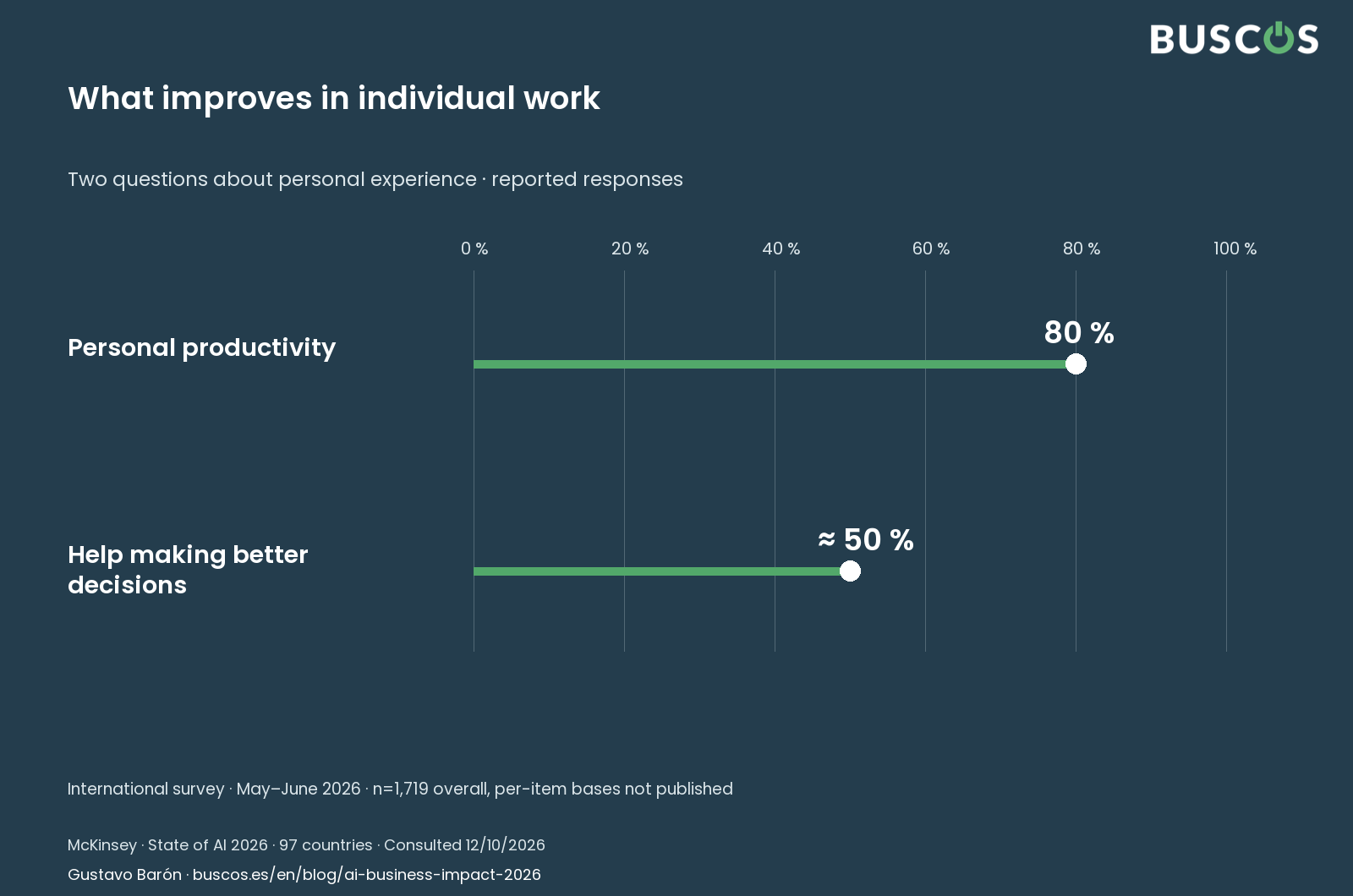
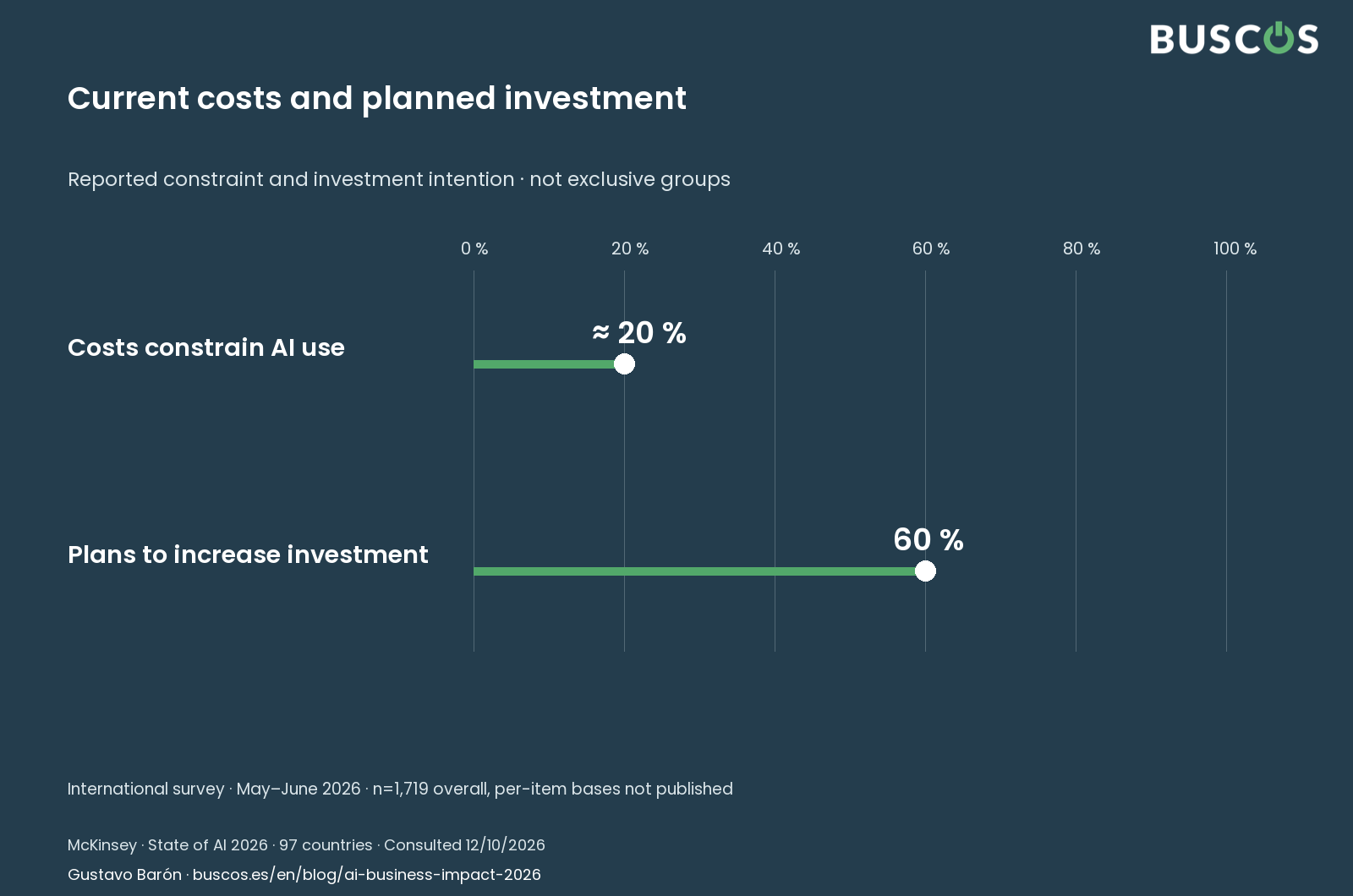
McKinsey reports that around one in five respondents say operating costs constrain AI use in their organisation. Separately, 60% expect their organisation to increase AI investment over the following year. The third chart keeps a reported constraint separate from an investment expectation.
The percentages must not be added or used to split companies into two exclusive groups. An organisation could recognise cost constraints while planning more investment. The summary lacks the cross-tabulation needed to establish how many respondents report both. An intention is not spending already incurred.
Reviewing your own proposal means understanding which costs depend on use, what preparation and checking remain inside the business and what maintenance a solution needs. That description avoids evaluating only a tool's price or a demonstration of speed. The survey adds context; a quotation requires its own conditions.
| Reported response | Share | Question scope |
|---|---|---|
| Personal productivity | 80% | Individual |
| Help making better decisions | ≈ 50% | Individual |
| Positive EBIT contribution | 37% | Organisation |
| Costs constrain use | ≈ 20% | Organisation |
| Plans to increase investment | 60% | Expectation |
McKinsey 2026: 1,719 participants overall, 97 countries; per-item bases are not published in the summary. Neither exclusive groups nor a representative Spanish sample.
Check the whole workflow before claiming a saving
A useful check defines where a task starts and ends. A received request may require classification, information retrieval, drafting and review before sending. Measuring only the draft omits important work. This example attributes neither an implementation nor a saving to any client.
Comparable situations and recorded exceptions matter. A test using simple cases can mislead if normal work includes incomplete or contradictory requests. Result quality belongs in the conversation alongside time and corrections.
Time freed up must also be distinguished from financial savings. A task taking less time does not automatically demonstrate lower cost or higher revenue. Those conclusions would require information and conditions that show what happened afterwards. The company decides which outcome is worth checking.
What to ask of a proposal for checking results
Before commissioning work, specify the task, available information and who can judge whether the output is acceptable. A proposal should explain which cases will be reviewed and what will be recorded: complete elapsed effort, errors, corrections or results needing intervention. Different assignments need different measurements.
Writing down what a test would not establish is useful too. An improvement in one task does not certify a person's overall performance or every application of a technology. A defined trial does not guarantee future financial results either. Its value is answering one question using relevant evidence.
If a solution needs a technical specialism, choosing a provider should start with that task and its conditions: what it can do, what it must integrate, what information it needs and how it will check exceptions. Explaining these points clearly adds more than promising a saving percentage without seeing the work.
| Level | Define | What to review |
|---|---|---|
| Task | Start and end | Time, quality and corrections |
| Process | Through to an accepted result | Exceptions and other teams' work |
| Cost | Assignment conditions | Use, preparation, review and maintenance |
| Financial outcome | Relevant period and information | Do not infer it solely from time improvement |
A BUSCOS reading framework, not survey results or a guarantee. Criteria are agreed for each assignment.
The business question begins where the demonstration ends
McKinsey's figures help separate an individual perception, a financial assessment and an investment intention. They are interesting signals, not an automatic answer for every company. The open question deserves attention: what change does the business want to check, and in which work?
A demonstration can begin that conversation. Moving forward requires a description of the assignment: situations, information, responsibilities and acceptance criteria. If these remain unclear, reviewing the proposal may be more useful than adding another tool or extending a trial without defining its purpose.
BUSCOS starts with a situation the business recognises. Free diagnoses offer a starting point for what it wants to improve; an agreed proposal review or a defined check is discussed through contact and a quotation. The aim is for the next step to make sense before attributing results that have not yet been demonstrated.
Sources and how to read the data
Primary sources consulted on 12 October 2026. Practical examples are BUSCOS interpretations, not client results.